
Breaking News
‘No Policy Reversal’: FG Clarifies Stance on Fuel Subsidy and Foreign Exchange Market

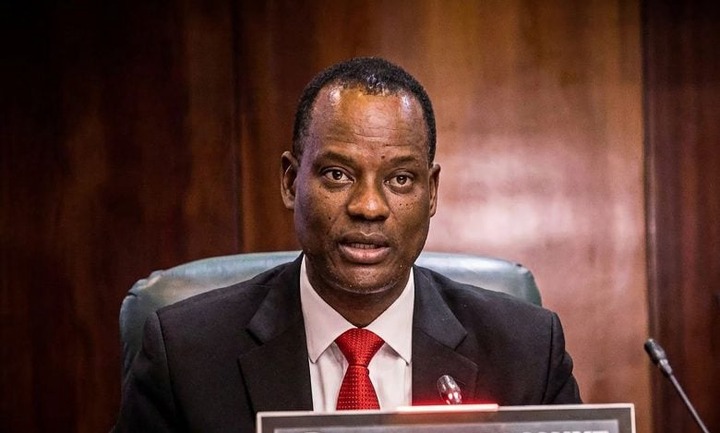
The Federal Government has ruled out a return to fuel subsidy and multiple foreign exchange rates, insisting that it will not reverse the economic reforms introduced under President Bola Tinubu’s administration.
The Minister of Finance and Coordinating Minister of the Economy, Taiwo Oyedele, stated this on Saturday in response to concerns about the government’s economic policies ahead of the 2027 general elections.
Oyedele spoke on the sidelines of the World Bank and International Monetary Fund (IMF) meetings in Bangkok, Thailand.
In his speech, the minister said the government remained committed to its decision to remove fuel subsidies and liberalise the foreign exchange market.
According to him, the possibility of reversing the policies had repeatedly come up during engagements with international rating agencies, investors and multilateral institutions.
He said the government had no plans to reintroduce fuel subsidies or return to a system of multiple exchange rates.
“And let me be clear as well, this was a recurring question almost through all our engagements, but also with the rating agencies, with the investors, and the multilateral institutions. Every time they ask, are you reversing your plans? Are you bringing back subsidies? Let me be clear, there will be no return to fuel subsidies or multiple exchange rates,” the minister said.
The statement comes amid renewed political debate over the removal of petrol subsidies, with opposition figures proposing alternative arrangements to reduce the financial burden on Nigerians ahead of the 2027 elections.
Former Vice-President Atiku Abubakar of the African Democratic Congress (ADC) and Peter Obi of the Nigeria Democratic Congress (NDC) have criticised aspects of the government’s economic policies and advocated changes to ease the cost-of-living crisis.
Atiku has proposed an alternative subsidy arrangement linked to domestic production, including the supply of crude oil to local refineries. He has also criticised the government’s recent 30-day petrol discount, describing it as a short-term measure that would not provide lasting relief to Nigerians.
Obi has similarly argued that the reforms were implemented without adequate production-driven measures to protect citizens from their economic consequences.
However, the Tinubu administration has consistently defended the removal of fuel subsidies and the liberalisation of the foreign exchange market, describing the policies as necessary to address longstanding structural problems in the economy.
The government has maintained that the former subsidy system placed an unsustainable burden on public finances, while the previous foreign exchange arrangements encouraged currency arbitrage, corruption and the depletion of the country’s foreign reserves.
President Tinubu announced the removal of the petrol subsidy during his inauguration in May 2023. The decision ended decades of government intervention in petrol pricing and was followed by a sharp increase in fuel prices and transportation costs.
The government argued that the subsidy system had become financially unsustainable and was vulnerable to abuse, including the diversion of subsidised petrol to neighbouring countries.
The foreign exchange reforms introduced by the administration also led to the consolidation of multiple exchange rate windows into a more market-driven system. The policy was intended to improve transparency, reduce opportunities for arbitrage and strengthen the foreign exchange market.
However, both reforms have attracted criticism from Nigerians who have struggled with rising prices, food costs, and transportation expenses.
Labour unions and civil society groups have also organised protests and industrial actions over the rising cost of living, arguing that wages have failed to keep pace with increases in the prices of essential goods and services.
Amid the public concerns, the government has introduced interventions intended to provide temporary relief, including a recent 30-day retail margin discount at Nigerian National Petroleum Company (NNPC) stations.
The intervention followed an announcement that the state-owned oil company would sell petrol at cost price for about 30 days, prompting some Nigerians to question whether the government was effectively bringing back a form of subsidy.
Oyedele, however, rejected that interpretation, insisting that the arrangement was a commercial decision by NNPC rather than a subsidy financed with public funds.
“The recent 30-day retail margin discount… is a time-bound commercial decision by the NNPC to reduce margins and support Nigerians. It is not a subsidy paid from public funds,” he said.
-
 Breaking News1 month ago
Throat Cancer Kills First, Avoid these Six Things To Save Your Life
-

 Sports2 weeks ago
FIFA Nullifies Argentina’s Plan to Retire Messi’s No. 10 Shirt
-

 Sports2 weeks ago
‘It’s foolishness’ — Odemwingie slams Ighalo’s Saudi advice to Osimhen
-
 Breaking News1 month ago
Haaland Reacts to Controversial Goal in Man City Win Over Man Utd
-
 Health - Lifestyle1 month ago
Soak Ginger And Garlic In Cold Water Overnight, Drink It To Cure The Following Health Condition
-
 Breaking News2 weeks ago
October 1: Why can’t you cure her – Atiku slams Tinubu for calling Nigeria cancer patient
-
 Breaking News2 weeks ago
October 1: Former Nigeria President Goodluck Jonathan sends strong message to Tinubu, governors
-

 Sports2 weeks ago
Ballon d’Or 2026: He has highest chances – Keita picks player to win award