
Breaking News
Investors need swift justice, not just incentives – Elumelu

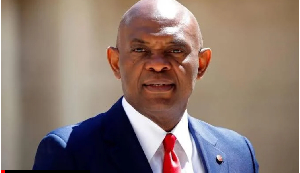
The Chairman of Heirs Holdings and Transcorp Group, Tony Elumelu, has urged President Bola Tinubu to prioritise judicial reforms, warning that delayed justice and weak enforcement of contracts could discourage investment despite government incentives and economic reforms.
Nigeria continues to face challenges with delays in commercial litigation, contract enforcement and dispute resolution, which can discourage domestic and foreign investment.
According to the World Bank’s Business Ready 2025 report, Nigeria scored 63.48 out of 100 for its commercial dispute resolution regulatory framework, 24.50 for public services and 53.80 for operational efficiency.
The findings highlight weaknesses in judicial service delivery and the gap between legal provisions and their implementation, reinforcing concerns about the speed and effectiveness of commercial justice in Nigeria.
Elumelu said investors require fair, impartial and timely judicial decisions, alongside predictable regulations and protection of contractual agreements, to commit long-term capital to Nigeria.
He made the call on Thursday in Abuja while delivering the keynote address at the WOC Justice Summit, themed ‘The Rule of Law as a Catalyst for Private Sector Growth and Economic Transformation.’
“Before power, before roads, before tax incentives, the first condition is a court judgment that is fair, impartial and timely,” he said.
The businessman explained that investors assessed the reliability of a country’s judicial system before committing funds, warning that uncertainty over contracts and regulatory enforcement could trigger capital flight.
“Where any of them is in doubt, capital doesn’t argue. It leaves,” he warned.
Elumelu added, “I have said it in New York, London, Paris and I’ll say it in Abuja: capital goes where it’s safe and stays where it’s respected.”
According to him, the rule of law requires contracts to remain enforceable despite changes in government, while regulations must apply equally to businesses and their competitors.
He recalled that his acquisition of a struggling bank alongside other investors in 1997 depended partly on confidence that Nigerian law would protect the transaction.
Similarly, he said investments in Transcorp, electricity generation and oil and gas involved assessing the country’s judicial system alongside its economic prospects.
“That is what the rule of law, properly working, delivers: justice that is routine, not heroic and justice that is not delayed,” he said.
Elumelu commended Tinubu’s economic reforms, including petrol subsidy removal, exchange-rate unification and the enactment of tax reform laws, describing them as necessary measures to address longstanding economic distortions.
He argued that the administration inherited an economy characterised by costly subsidies, multiple exchange rates that encouraged arbitrage and a tax system that disadvantaged compliant businesses.
Acknowledging the hardship caused by the reforms, he said, “I know the cost has been borne by ordinary Nigerians, and I know you know it too.”
He maintained that discretionary subsidy allocations, opaque foreign exchange arrangements and negotiated tax obligations undermined fair competition and economic growth.
Elumelu particularly emphasised the electricity sector, arguing that transparent regulation would attract investment, improve power supply and support industries, hospitals and educational institutions.
-

 Sports2 months ago
UNL: Brazil legend, Marcelo reacts as Cristiano Ronaldo leaves Portugal national team camp
-
 Breaking News2 months ago
October 1: Former Nigeria President Goodluck Jonathan sends strong message to Tinubu, governors
-

 Sports2 months ago
How Carlos welcomed me to Real Madrid — Marcelo
-

 Sports2 months ago
AFCON Qualifiers: Carlos Queiroz exits Ghana job after Black Stars’ 4-2 defeat to Gambia
-

 Sports2 months ago
FIFA Nullifies Argentina’s Plan to Retire Messi’s No. 10 Shirt
-
 Health - Lifestyle2 months ago
Reasons Why Wall Geckos Keep Coming into Your House and How You Can Stop Them from Coming
-
 Health - Lifestyle2 months ago
Drink This At 8Am And It Will Eliminate All The Fat Around Your Stomach Very Effectively
-
 Breaking News2 months ago
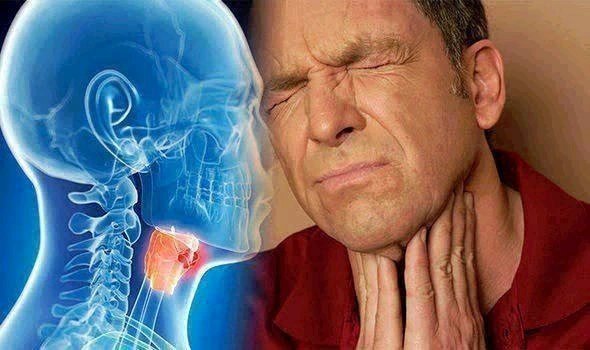
Throat Cancer Kills First, Avoid these Six Things To Save Your Life